Two graceful girls inspired by biwa hōshi (Japanese lute priests
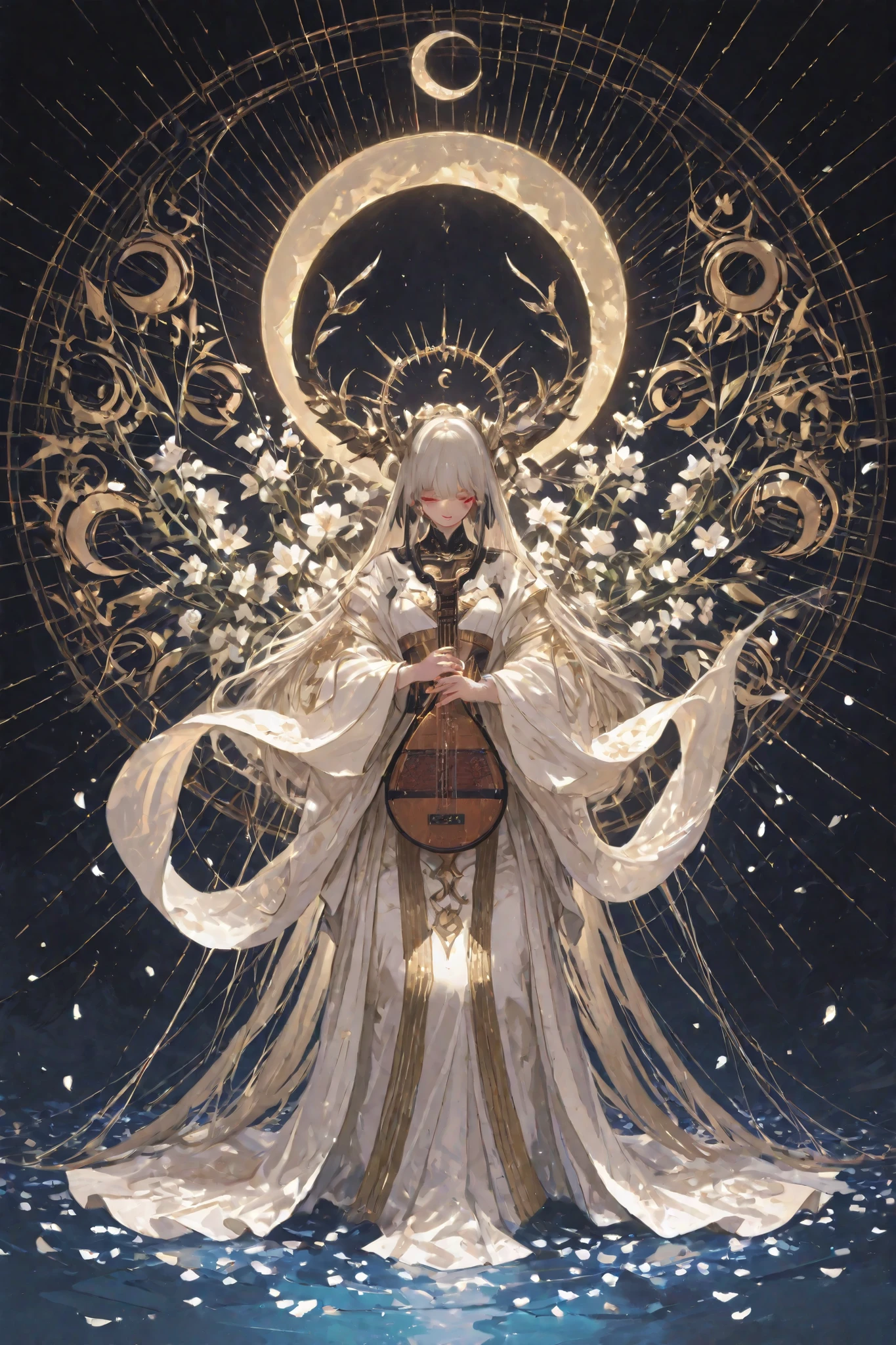
Two graceful girls inspired by biwa hōshi (Japanese lute priests), energetically strumming traditional Japanese biwa with large plectrums. The biwa has a teardrop-shaped wooden body with a smooth, light-colored soundboard, decorated with crescent moon and wave motifs. The body narrows into a dark neck with five tall frets and sharply bent headstock, featuring four large, symmetrical tuning pegs. The silk or nylon strings pass over a white bridge and are tied at the end of the instrument. The girls wear elegant aristocratic garments from the Nara period, featuring flowing sleeves and layered textures. They are set against a backdrop of spring scenery, with flower petals dancing through the air. Their poses convey rhythm and movement. Rendered in a semi-realistic style, inspired by Nihonga bijin-ga (Japanese beauty painting), with delicate facial expressions, dynamic composition, and refined lighting.

提示词
复制
Two graceful girls inspired by biwa hōshi (Japanese lute priests), energetically strumming traditional Japanese biwa with large plectrums. The biwa has a teardrop-shaped wooden body with a smooth, light-colored soundboard, decorated with crescent moon and wave motifs. The body narrows into a dark neck with five tall frets and sharply bent headstock, featuring four large, symmetrical tuning pegs. The silk or nylon strings pass over a white bridge and are tied at the end of the instrument.
The girls wear elegant aristocratic garments from the Nara period, featuring flowing sleeves and layered textures. They are set against a backdrop of spring scenery, with flower petals dancing through the air. Their poses convey rhythm and movement. Rendered in a semi-realistic style, inspired by Nihonga bijin-ga (Japanese beauty painting), with delicate facial expressions, dynamic composition, and refined lighting.

共 0 条评论
0
0